Why I Built This Site
by Keiryan Wilson
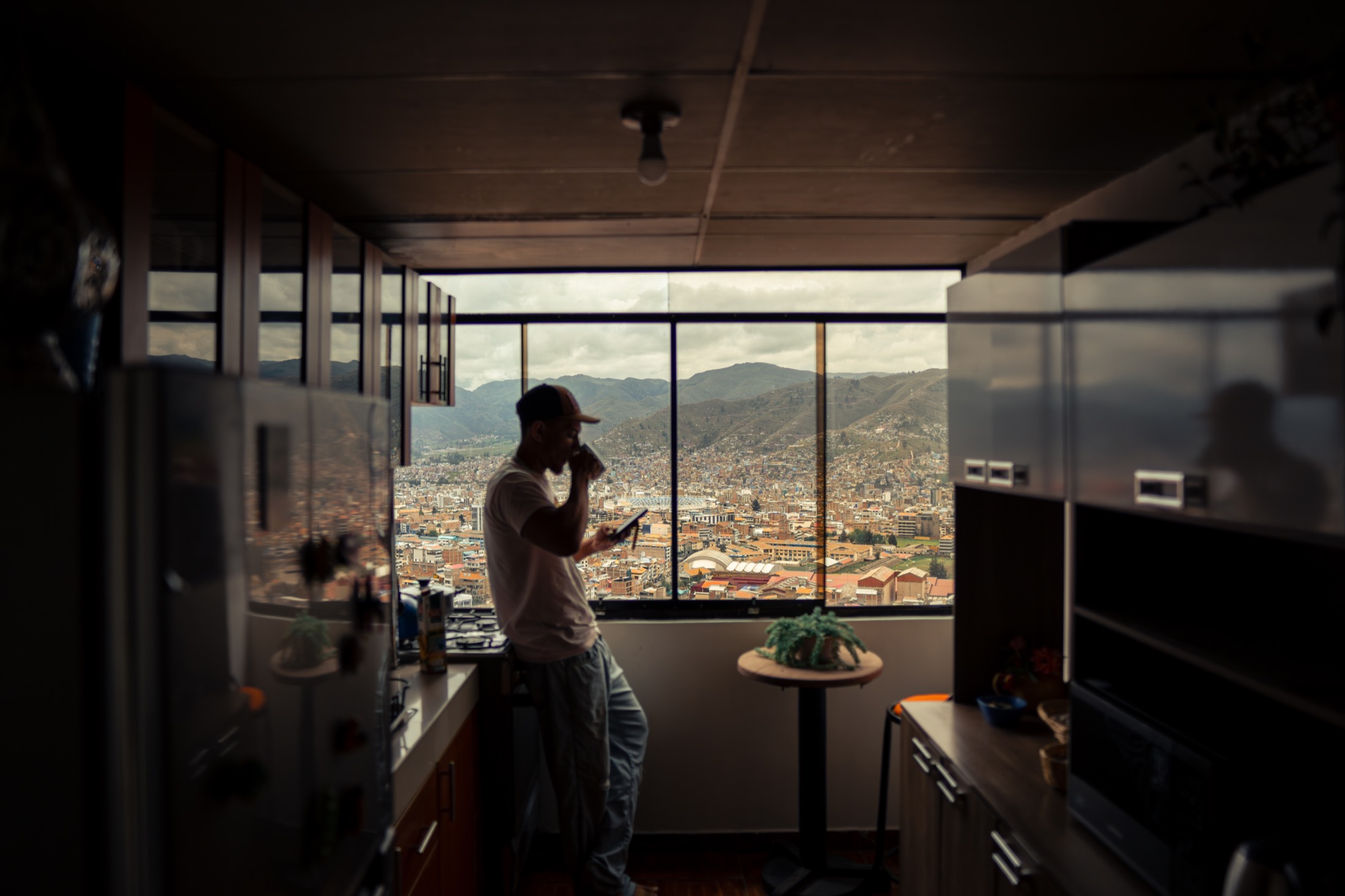
I have been a builder for as long as I can remember.
Long before I knew what code, systems, interfaces, or the internet were, I had Legos. My fascination with building things probably started with my first Lego set, which, if I remember correctly, was a firetruck.
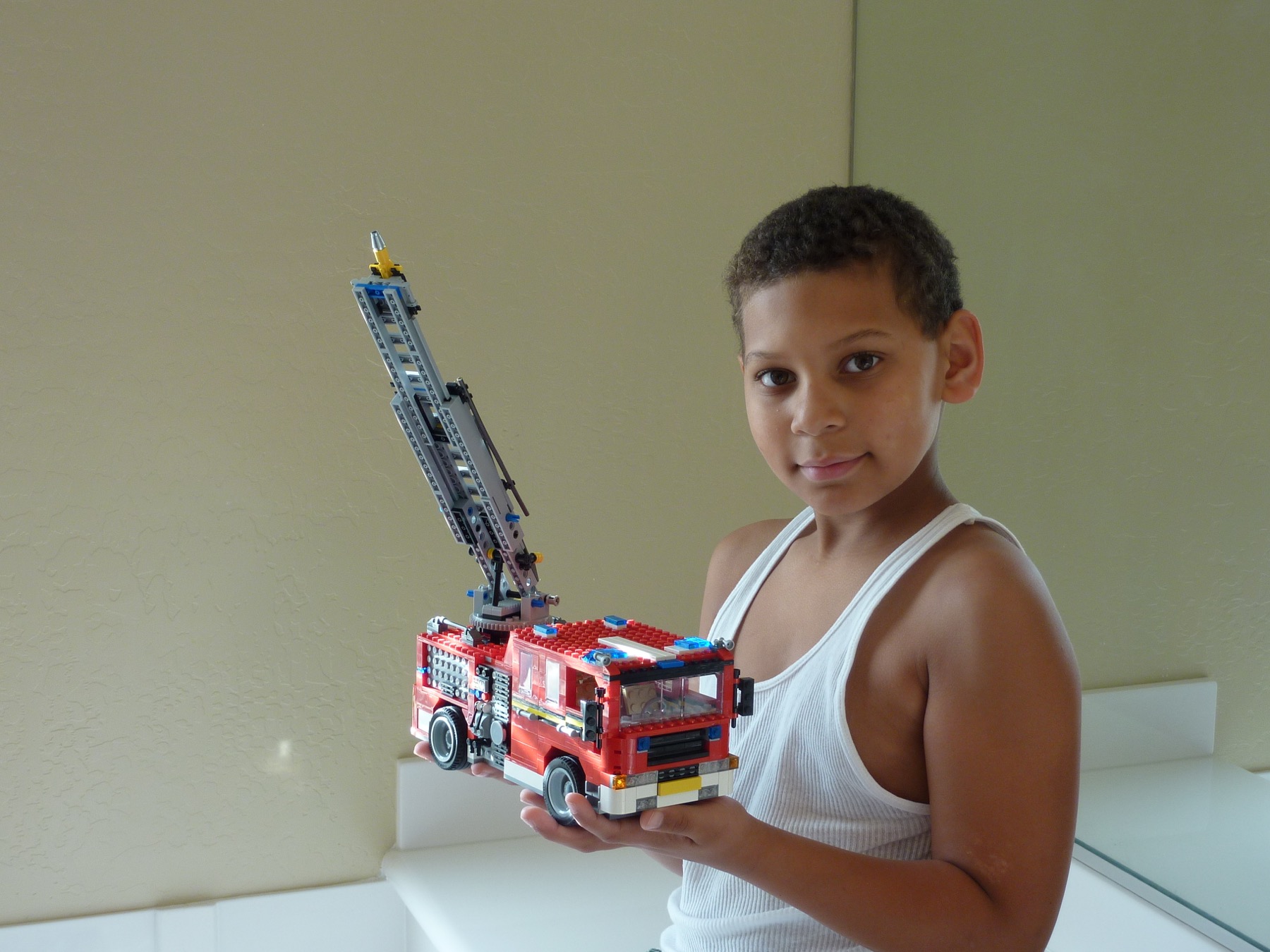
I loved following the instruction manual. There was something satisfying about turning that chaotic pile of plastic bricks into the thing on the box. But once I'd built the set, I would take it apart and challenge myself to build whatever else I could think of with the pieces I had. Instead of just a fire truck, I'd try to build a car, or a house, or a transformer, whatever I could imagine from what was in front of me. That became the game: figuring out what else was possible with the pieces I had.
The fascination only grew as I got more Lego sets, and then I discovered Lego Creationary, which felt like someone had turned that exact instinct into a board game. You drew a card and had to figure out how to build whatever was on it with the pieces available to you. I absolutely adored that game. I played it with whoever I could, which was mostly my little sister at the time, and when nobody would play, I'd play it solo just to get better at building things faster and more creatively.
Then Minecraft entered the picture, and Minecraft was basically Legos in an infinite space. Suddenly building wasn't limited to the pieces in a box. I could make worlds, structures, systems, hidden rooms, redstone contraptions, and whatever else I could figure out how to create. And once I'd spent enough time building inside the game, I started wondering how the game itself worked.
That led me to mods. I wanted to change mobs, build my own mods, and understand how people were making the things I loved playing with. Somewhere in there I had a thought that probably changed the direction of my life: if I could learn to code, I could build more than what the game already gave me.
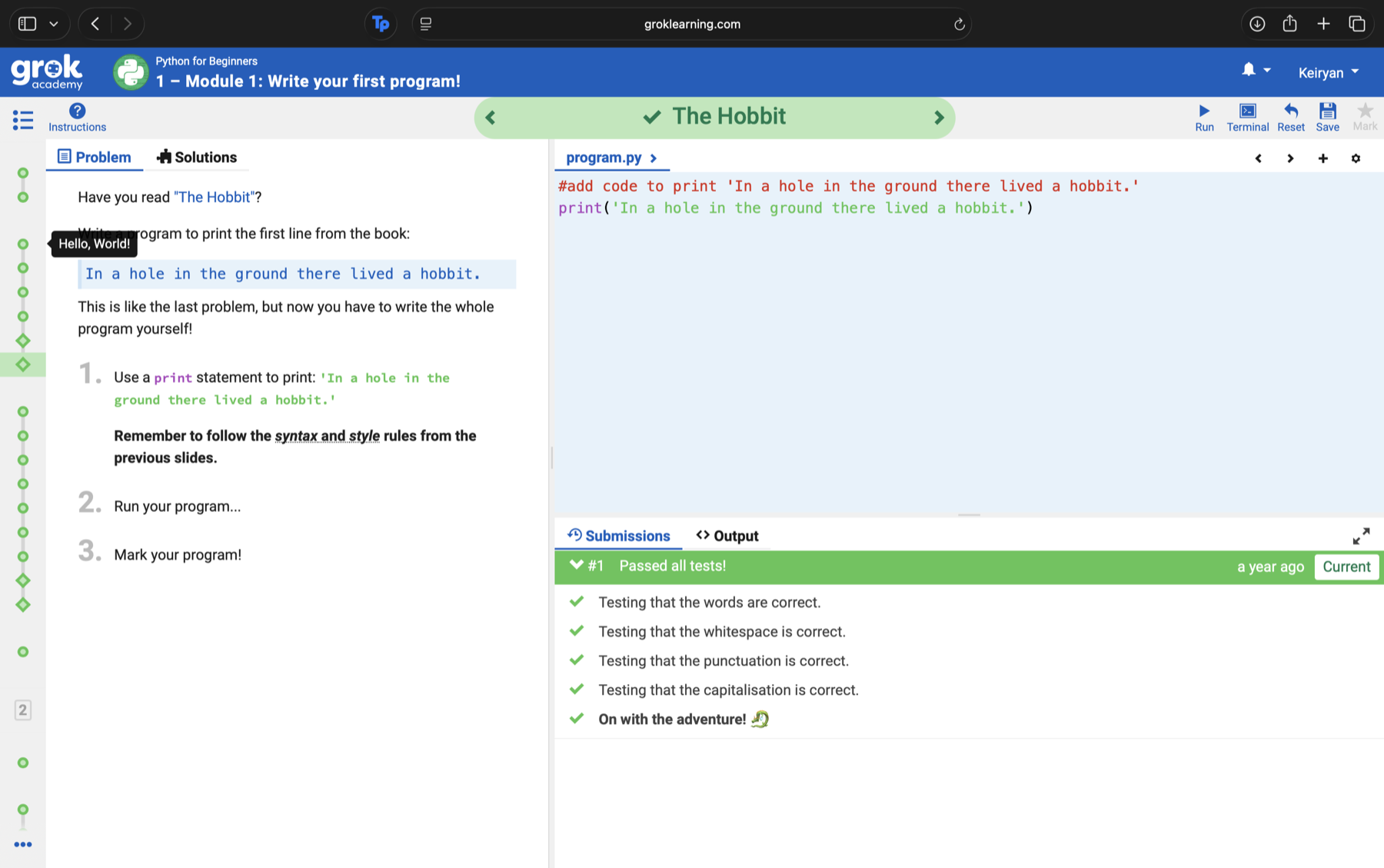
I was homeschooled for sixth grade, and when I was supposed to be completing my studies, I kept sneaking off to learn Python on Grok Academy instead. I was in love with the idea that I could write in a language computers understood. I could type something, run it, break it, fix it, and slowly make the machine do what I wanted.
There was one problem: I wasn't allowed to have a computer. My parents were careful about how much computer time we got, which, honestly, was probably fair. The internet is a scary place for kids!
But I found a really old laptop in the garage. Thick, prehistoric, the kind of thing that must have weighed five pounds and got about an hour of battery life. I installed a Python IDE on a thumb drive, snuck the laptop out of the garage, and since my room was in the basement, I'd wait until everyone else was asleep and write code at night.
The first real thing I remember building was a terminal game based on a doll family my sister and I had invented. I wanted it to feel like some kind of hacker game. The code was absolutely terrible, just a pile of switch statements, broken logic, and oddly named variables, but it worked enough to make me feel like I'd actually created something. Code turned out to be a building block, just like my Legos from long before. And building that awful little game taught me how to debug, how to research, how to read documentation, and how to get stuck and stay with it until I found a way through.
That love of coding sat on the back burner for years. I worked at Apple retail for almost two years, which might seem unrelated, but it taught me more than I realized at the time: communication, empathy, listening, explaining technical things to people without making them feel small, staying calm when someone is frustrated and figuring out what they actually need.
I really, really wanted to stay with Apple. But when I moved to Wilmington, North Carolina, there was no Apple retail store anywhere nearby, and I knew I had to jump into something different.
So in 2021, I came back to coding. I found a mentor named Cristian Florea, a Romanian developer who introduced me to front-end development, and that was the beginning of my tech career.
It was also maybe the worst time in history to try to break into tech. The market was collapsing, companies were laying people off left and right, and my hopes and dreams of jumping straight into a development job kind of shattered. It took months and months of trying, then more months after that. After about a year and a half, I finally landed my first development role.
Since then the work has moved through front-end development, AI operations, identity infrastructure, internal tooling, and the kind of operational problem-solving that sits between people, software, and process. The tools keep changing. Legos became Minecraft, Minecraft became Python, Python became JavaScript and React and whatever else the problem requires. But the instinct hasn't changed: take the pieces in front of me, understand how they work, build the thing the instructions describe, then take it apart and see what else it could become.
That's why I built this site. I wanted a place on the internet that felt like mine. A home base where I can write things down, document what I'm learning, and connect the parts of my work that don't always fit neatly into one category. For a long time those interests felt scattered. This site is an attempt to gather them into one place. We'll see how that works out 😂
It won't be perfect, and I don't want it to be. I want it to feel alive, like something I can keep taking apart and rebuilding as I learn more. That has always been the point.
Build the thing. Learn from it. Break it open. See what else it can become.